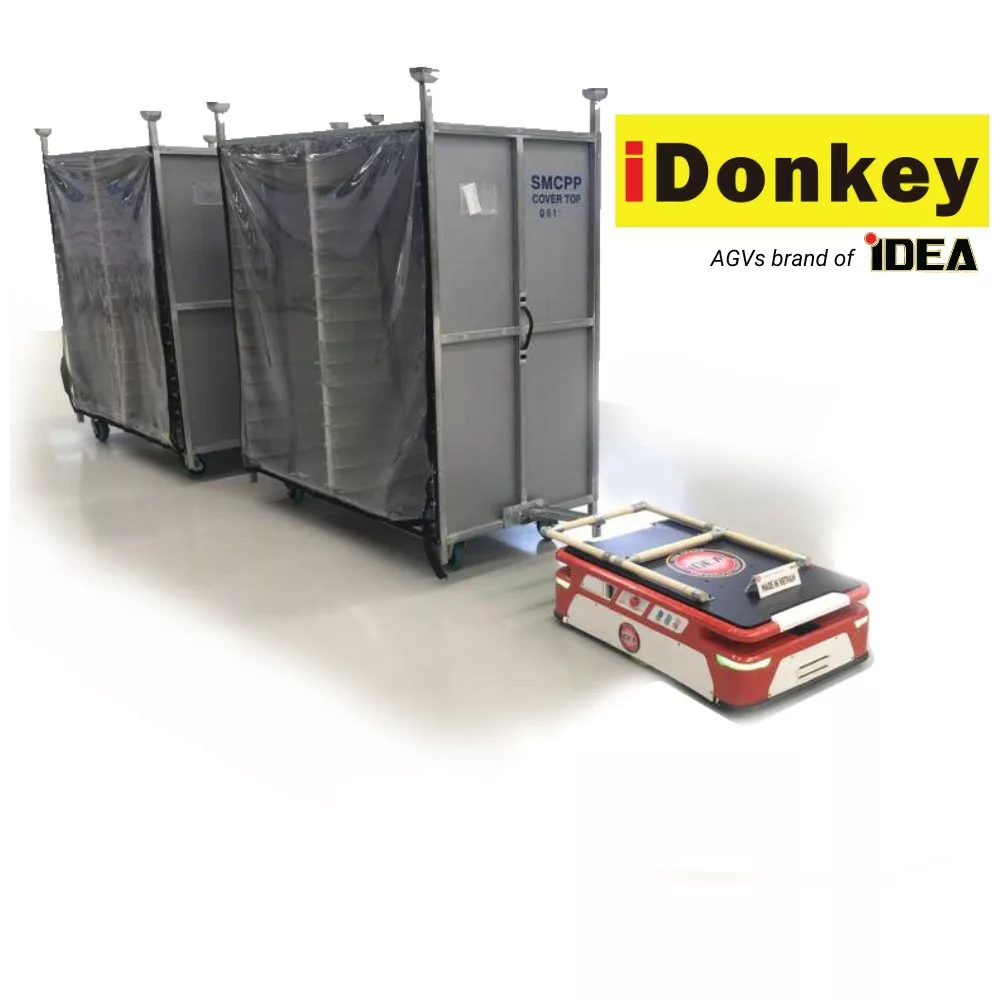

AGV fault codes are critical alerts that appear during the operation of autonomous AGV vehicles. Understanding these fault codes enables operators to respond quickly, ensuring the equipment operates safely and effectively.
Below is a summary table of common fault codes and alerts for AGV iDonkey along with the corresponding troubleshooting actions that assist operators in timely interventions, minimizing operational interruptions.
| Fault Code | Fault Name | Description | Troubleshooting |
| 00 | AGV READY! | AGV is ready. | |
| 01 | BUMPER TRIGGERED | Bumper sensor activated. | Move obstacles away from the bumper’s operating area. Press reset. |
| 02 | EMERGENCY STOP! | Emergency stop. | Release the Emergency button. Press Reset. |
| 03 | LEFT DRIVER ERROR! | Left motor driver error. | Press Reset. AGV to reset driver fault.* |
| 04 | RIGHT DRIVER ERROR! | Right motor driver error. | Press Reset. AGV to reset driver fault.* |
| 05 | DRIVER MOTOR ERROR! | Both motor drivers error. | Press Reset. AGV to reset driver fault.* |
| 06 | DANGEROUS AREA TRIGGERED! | Stop due to obstacle in the danger zone. | Press Reset. Move obstacles out of the AGV’s operating area. |
| 07 | AGV OUT OF LINE! | AGV running outside the guidance line. | Press Reset. Move AGV back to the line, allow the vehicle to resume operation. |
| 08 | AGV NOT IN LINE! | AGV’s top sensor not positioned on the line at START. | Press Reset. Move AGV onto the line, allow the vehicle to resume operation. |
| 09 | PID PARAMETER ERROR! | PID parameters not set. | Contact a qualified technician or request assistance from the supplier to set parameters. |
| 10 | LOW BATTERY! | Low battery voltage (vehicle still operates). | Vehicle operates normally. Upon reaching the charging station, it will stop and alert the operator to replace the battery. |
| 11 | VERY LOW BATTERY! | Very weak battery voltage (vehicle cannot continue operation). | Power off, replace the battery. |
| 12 | OVER CURRENT! | Overcurrent (exceeding allowed weight limit or obstruction causing the vehicle to stop). | Press Reset. Check load weight, obstacles in the front and at the wheels. |
| 13 | NO ROUTE CHOSEN! | Route not selected. | Set the route on the HMI. |
| 14 | OVERTIME PINTLE! | Timeout when lifting or lowering a pintle. | Press Reset. Check for obstacles on the pintle.* |
| 15 | OVERLOAD FOR UPPER PINTLE! | Overload when lifting the pintle. | Press Reset. Check for obstacles on the pintle.* |
| 16 | ERROR FOR STATION TROLLEY! | IO error at active station. | Check the status, position of the trolley at each station. |
| 17 | TROLLEY MISSING IN ALL ROUTES! | IO not available on all routes. | Check the status, position of the trolleys at each station. |
| 18 | AGV DISCONNECTED FROM SERVER! | AGV not connected to the server. | Check the software on PC server, router, wifi repeater… |
| 19 | USB ERROR! | USB error: incorrect format or file map not formatted… | Check the USB format and file naming conventions… |
| 20 | CHARGE STATION! | Low battery voltage, stopping to charge. | Power off, charge and replace the battery. |
| 21 | NOT RECEIVING DATA FROM REMOTE IO! | Cannot retrieve data from remote IO. | Check remote IO, server, wifi repeater… |
| 22 | EEPROM INITIALIZATION ERROR! | Failed to initialize EEPROM read. | Power off, restart after 5 seconds. |
| 102-104 | MODBUS COMMUNICATION ERROR! | Communication errors among PCBs in the AGV. | Power off, restart after 5 seconds.* |
| 200-254 | ERROR FOR STATION X TROLLEY! | Station status errors, where X denotes the order of pre-set stations. | Press Reset. Check the status and setup of the trolleys accordingly. |
*If the reset does not resolve the issue, contact maintenance or the manufacturer for assistance.
Note:
- Always check safety factors before operating the vehicle.
- Perform regular maintenance to ensure consistent and durable operation.
- Only perform advanced settings and troubleshooting with appropriate expertise or technical support.
Understanding AGV fault codes and the corresponding troubleshooting steps is key for operators to manage equipment proactively, safely, and effectively. This is especially true for AGV models like iDonkey, where fault codes are typically designed to alert and prevent issues before they impact the entire system. When operators accurately interpret and address the faults, abrupt stoppages, collisions, or production interruptions can be minimized.
Not only does proper fault management ensure operational continuity, but it also extends equipment lifespan, reduces maintenance costs, and creates a safe working environment for all personnel in the factory or warehouse.
However, with a complex automated system like AGV, it is not always possible to resolve faults manually or on-site. In cases where fault codes cannot be rectified through basic actions, operators must promptly contact the technical team or manufacturer for in-depth assistance, preventing wider impacts on other equipment and processes.
At IDEA, we not only provide advanced AGV solutions such as iDonkey, but we also support our customers through the entire usage process – from technical consulting and operational training to post-sales assistance. Whenever you encounter difficulties with your equipment, rest assured that our technical team is always ready to provide timely and effective support.