


I. Concept of Engineering Drawings
Creating a machine, piece of equipment, or an entire production line involves many steps. It starts with a design concept ⇒ Design assembly drawings (2D or 3D) ⇒ Creating detailed engineering drawings ⇒ Manufacturing ⇒ Assembly ⇒ Inspection ⇒ Packaging ⇒ Deployment.
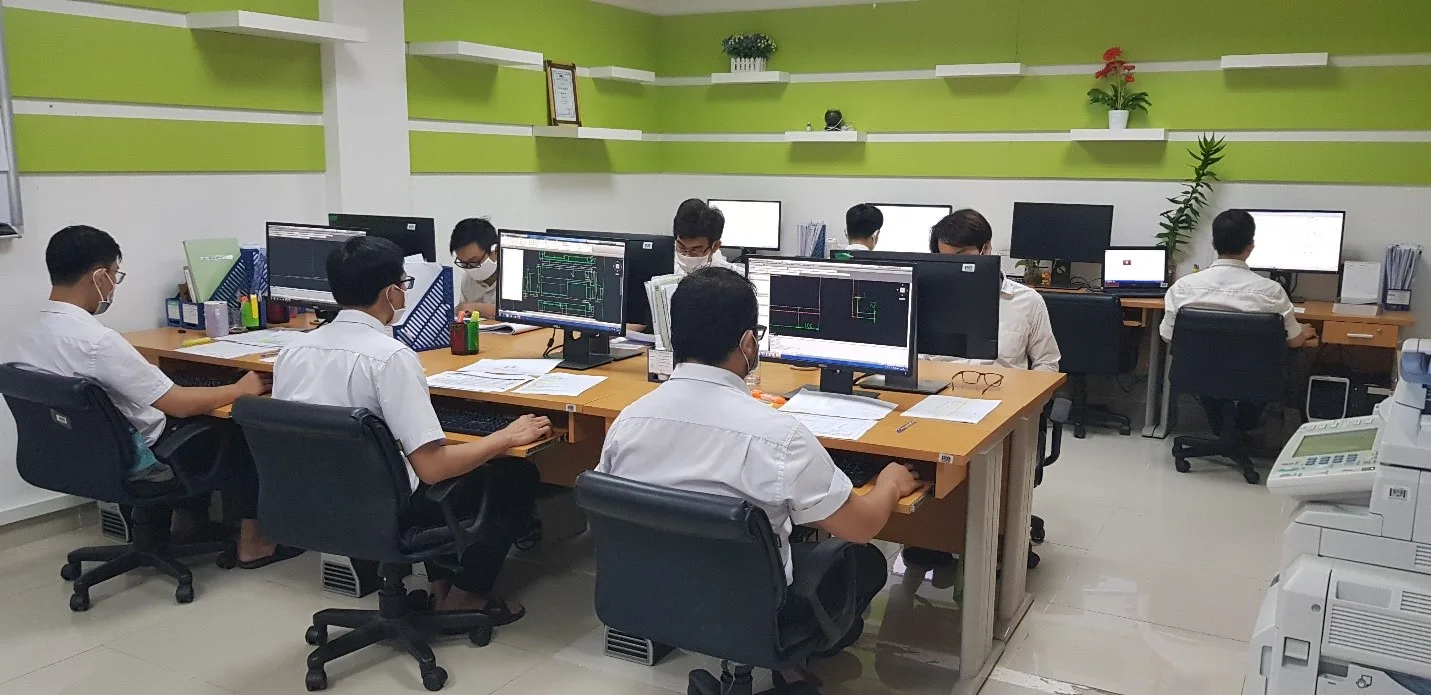 The design staff of IDEA Group is performing engineering drawing tasks
The process involves extracting details from a 2D or 3D assembly drawing into a new drawing frame, fully annotating dimensions, tolerances, finishes, symbols, etc., to create a complete engineering drawing. This work is known as detail engineering. It is often abbreviated as engineering drawings.
Thus, the task of creating engineering drawings is critical. It is considered a fundamental part of detailed design. The detailed drawing, once completed, will be sent for manufacturing. The quality, precision, and functionality of the component heavily depend on the accuracy of the detail drawing. For example:
- Incorrect dimensions will prevent assembly.
- Providing unreasonable tolerance values may also cause assembly failures.
- Improper indication of roughness may affect the component’s functionality and could lead to defective products, resulting in poor quality.
- Other influencing factors.
II. Basic Knowledge Required Before Creating Engineering Drawings
*Material of the component: The most commonly used materials for components are carbon steel, stainless steel (SUS), aluminum alloys (collectively referred to as aluminum materials), and various plastics like POM, MC Nylon, PET, etc. There are also other materials.
III. Guide to Creating Engineering Drawings
3.1. Customer Standards
Before commencing any task for a specific order, the first requirement is to thoroughly read the standards. Understand all content within the customer’s standards provided.
3.2. Drawing Frame (Template)
Engineering drawings must have a drawing frame. If it’s not available prior to drawing creation, the project manager must be requested to provide the drawing frame.
For 3D design software such as SolidWorks, Inventor, Catia, Creo, changing the drawing frame or scale will happen automatically, which makes it quite easy; attributes will also adjust automatically.
For 2D design software such as AutoCAD, Icad, BricsCad, changes to the drawing or scale won’t happen automatically (except for pre-installed modules), so manual adjustments are needed. Some properties may not change automatically, which is particularly important to note. When changes are made, all properties must be adjusted to suit the current drawing frame.
3.3. Layer Standards
Each customer typically has its own regulations regarding layers, and while working, one must adhere to the layer specifications set by the customer. Generally, in 3D design software, layers are pre-established, and during the creation of engineering drawings, they automatically adjust by simply using the provided customer template. However, for 2D software, one must follow the customer’s layer regulations.
The layer standards for each order may vary depending on the customer. Generally, the following types of layers are considered:
- Outer boundary layer: solid line (outline), typically thickness of 0.25~0.3mm.
- Hidden line layer: dashed line (hidden line), typically thickness of 0.18~0.2mm.
- Centerline layer: dashed-dotted line (center line), typically thickness of 0.13~0.15mm.
- Dimension line layer: thickness equal to hidden line layer. Annotation text also typically shares this layer.
- Thin solid line: used for indicating thread lines or separate cut lines, break lines. Thickness is usually the same as that of the centerline.
- Two-dashed line: used for reference lines, thickness equal to that of dimension line.
- Other types of layers.
Note: For Icad software, line thickness is divided into three categories: thick, medium, and thin. If there is no directive from the customer, only medium and thin types should be used. Medium thickness is for outer lines, while the rest uses thin thickness.
3.4. Projection Angles, Projection Arrangement, and Dimensioning Origin
*Projection angles: Unlike Vietnamese standards, projection angles according to JIS standards originate from a third projection point.
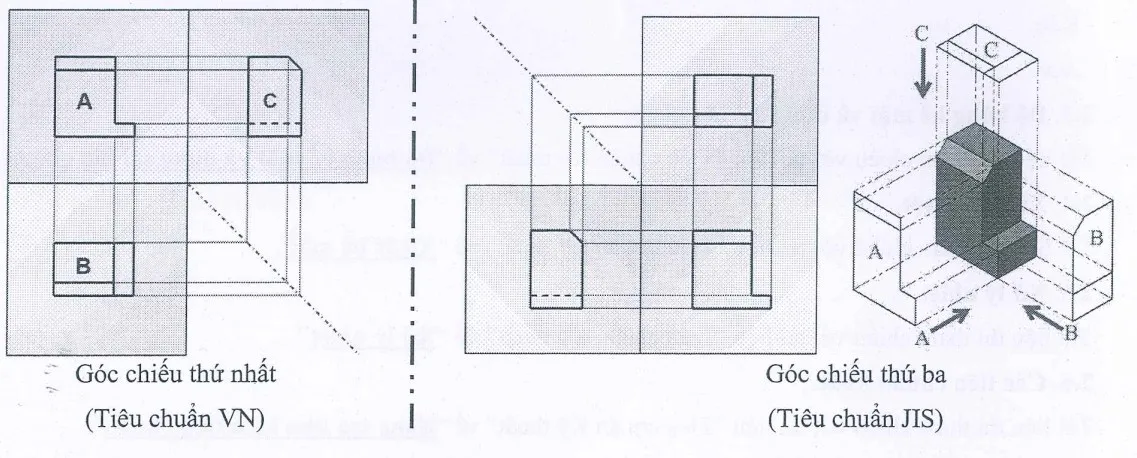
*Projection arrangement in the drawing
The priority order is from ① to ⑤. Typically in engineering drawings and also assembly drawings, the projections are arranged mainly from ① to ② (main projection ①, top view, right side view). Besides the projection arrangement rules in the illustration, other arrangements can include:
- Based on the layout in the assembly drawing
- According to machining rules
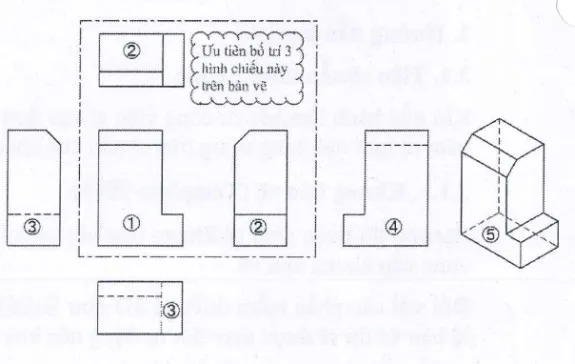
When arranging projections in the drawing, it should be chosen based on the context to ensure the drawing is easy to read, understand, and minimizes confusion.
*Projection arrangement rules for basic details
Cylindrical details should be arranged horizontally, with the more complex features on the right side (following machining rules).
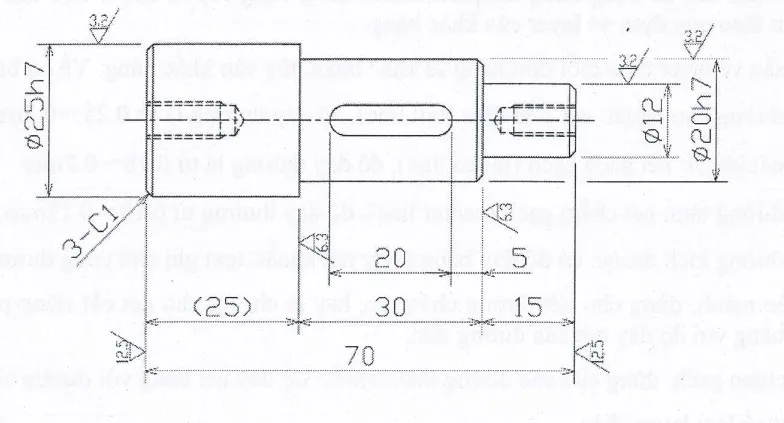
Longer details should also be arranged horizontally.
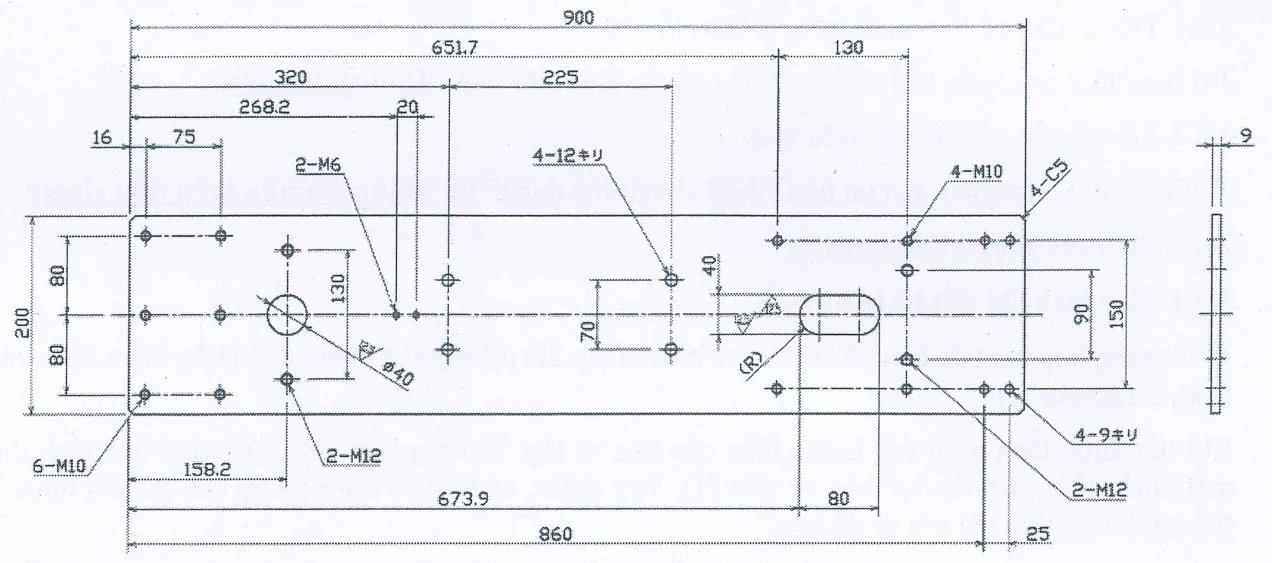
*Other detail types.
Frame: Arrange according to actual working orientation. The bottom represents the ground level.
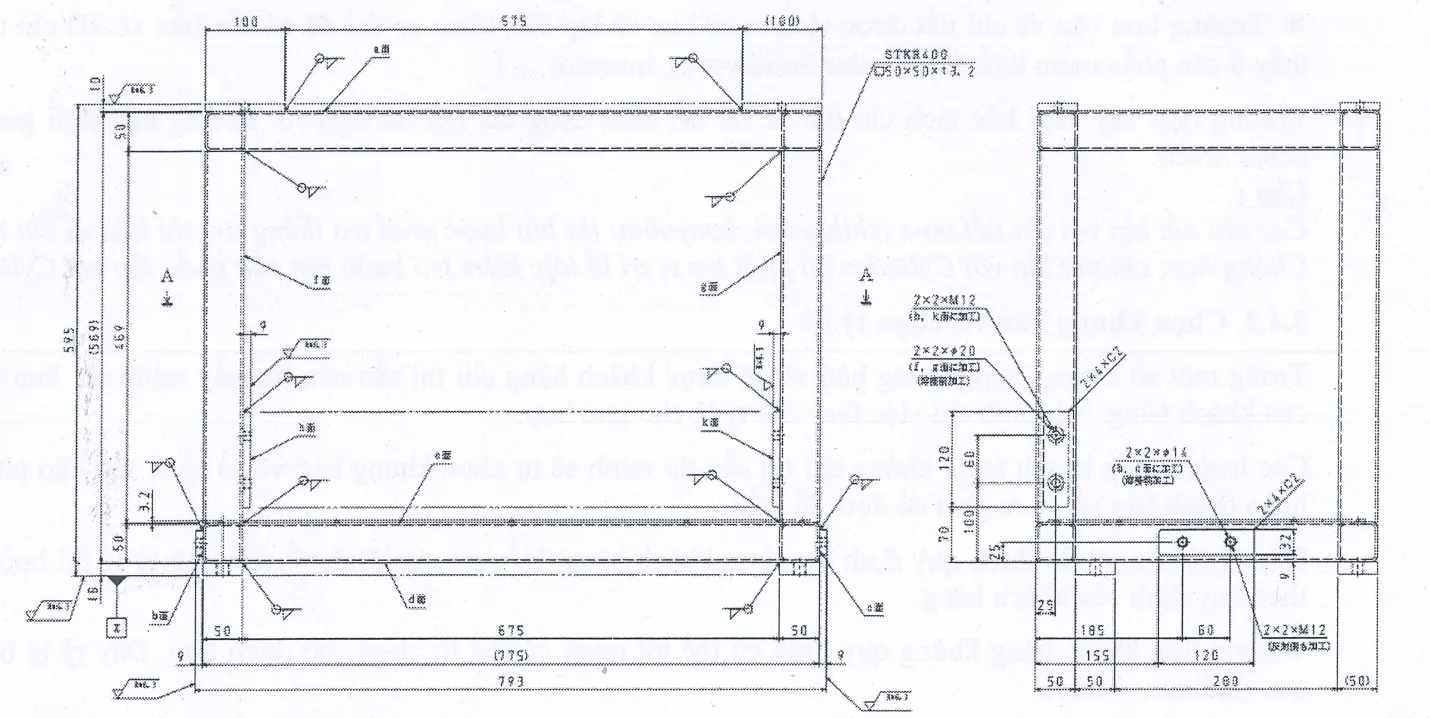
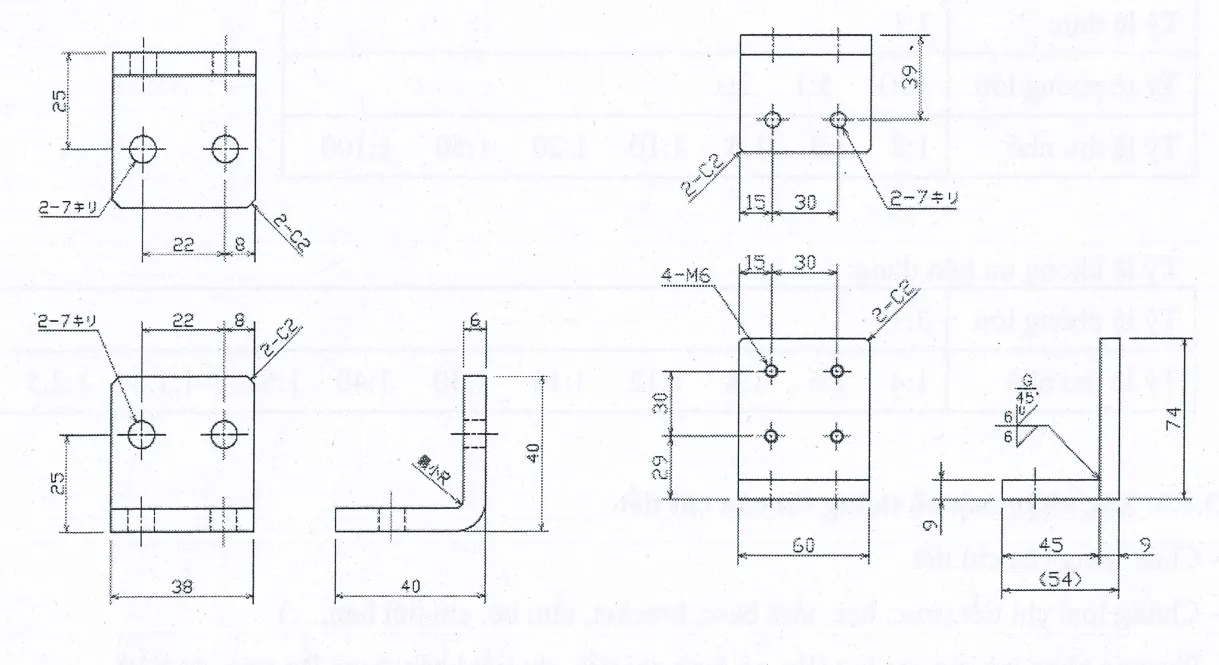
Bracket, bent plates
*Basic Standards
- Standards for threaded holes, plain holes, stepped holes, conical holes.
- Standards for other accessories
In the next part, I will guide you through the detailed steps for creating engineering drawings. Stay tuned!