
I. Introduction to industrial robot
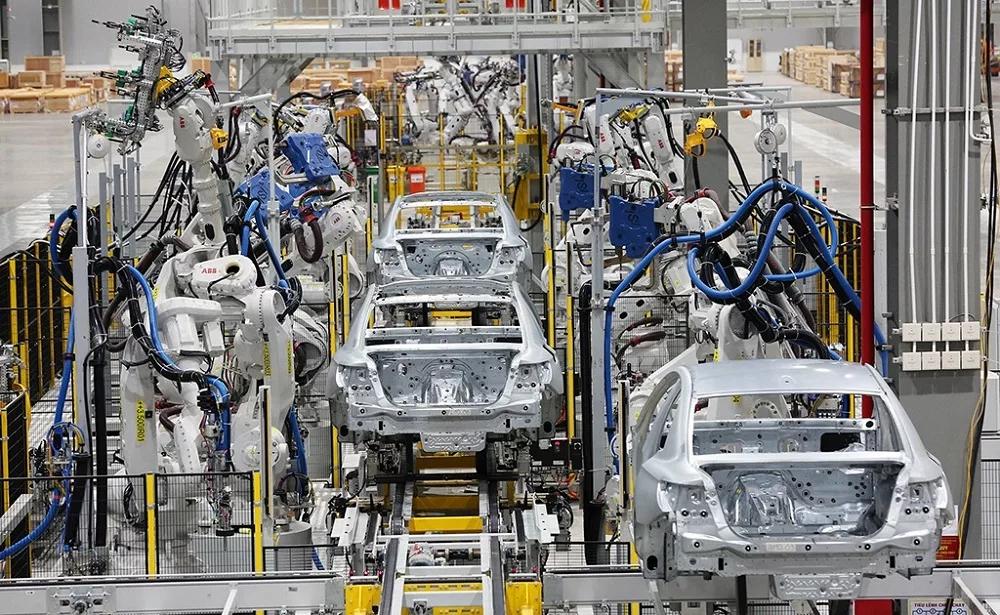
In the modern industrial era, industrial robots have become the centerpiece of smart manufacturing lines. No longer a sci-fi image, they are now practical tools that help businesses speed up production, reduce errors, and optimize costs. With the ability to work continuously, learn, and collaborate flexibly with people, industrial robots are contributing to higher efficiency, stable quality, and improved working environments. Understanding the history and development trends of this technology is the key to building a sustainable automation strategy for the future.
II. History of the formation and development of industrial robot
1. The 1950s–1960s: George Devol – The man who laid the foundation for the modern industrial robot
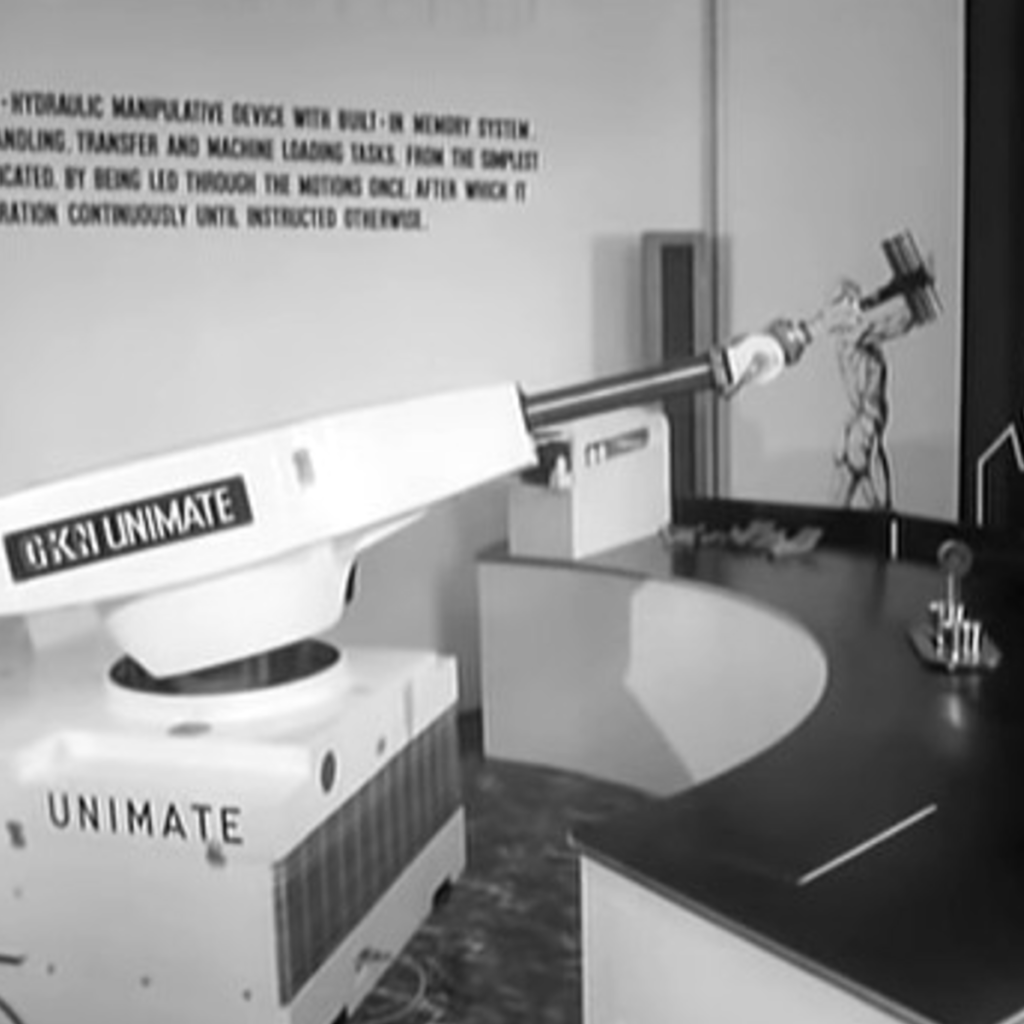
George Charles Devol Jr. (1912–2011) was an American inventor, nicknamed the “Father of Robotics.” In 1954, he filed a patent application for a device named “Programmed Article Transfer,” laying the groundwork for the concept of Universal Automation, later known as Unimate – the world’s first industrial robot.
Interestingly, in the 1940s, Devol hadn’t envisioned robots. He focused on magnetic recording devices and automatic control systems. However, with a forward-looking vision, he recognized automation’s potential in manufacturing and decided to develop a programmable robotic arm. This invention was patented in 1961 and became the foundation for the modern robotics industry.
2. The 1970s–1980s: Industrial robots enter production lines
During this period, industrial robots began to move from the lab into actual manufacturing, marking a major milestone in global automation.
KUKA – The European pioneer
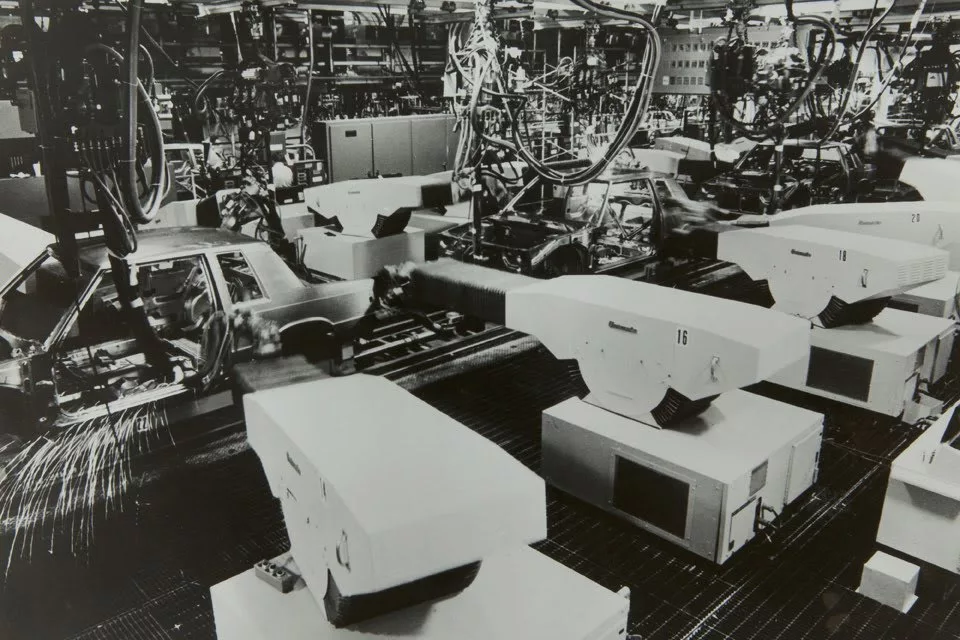
In 1973, KUKA — a technology company from Germany — developed Europe’s first industrial robot named Famulus. This was the first robot in the world with six electrically driven axes, enabling flexible motions similar to a human arm. Famulus quickly found applications in Daimler-Benz’s automatic welding lines, ushering in a new era for automotive manufacturing in Europe.
Fanuc and Yaskawa – The robotics wave in Japan
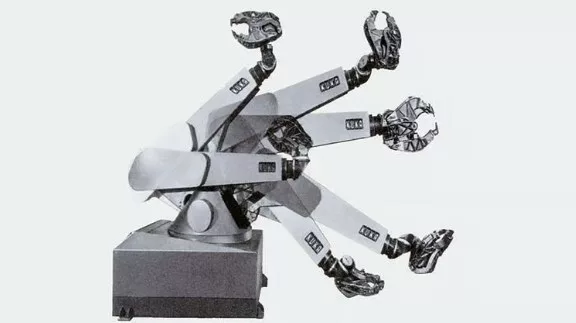
In Japan, Fanuc and Yaskawa rose to prominence as giants in the industrial robot field. Fanuc began developing robots in 1974, focusing on CNC machining and electronic assembly. Meanwhile, Yaskawa — with its Motoman line — drove breakthroughs in arc welding and material handling, helping Japanese factories achieve superior productivity and stable quality.
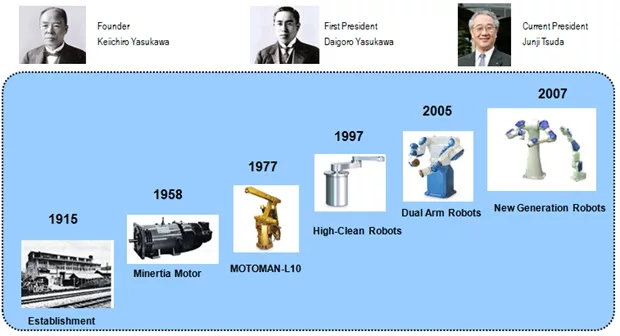
ABB – Bringing industrial robots into mass production
ABB (Switzerland) also joined the race. They developed the first IRB robot lines in the late 1970s, primarily used for spot welding and automated painting. ABB quickly became a strategic partner for many major manufacturers in Europe and North America.
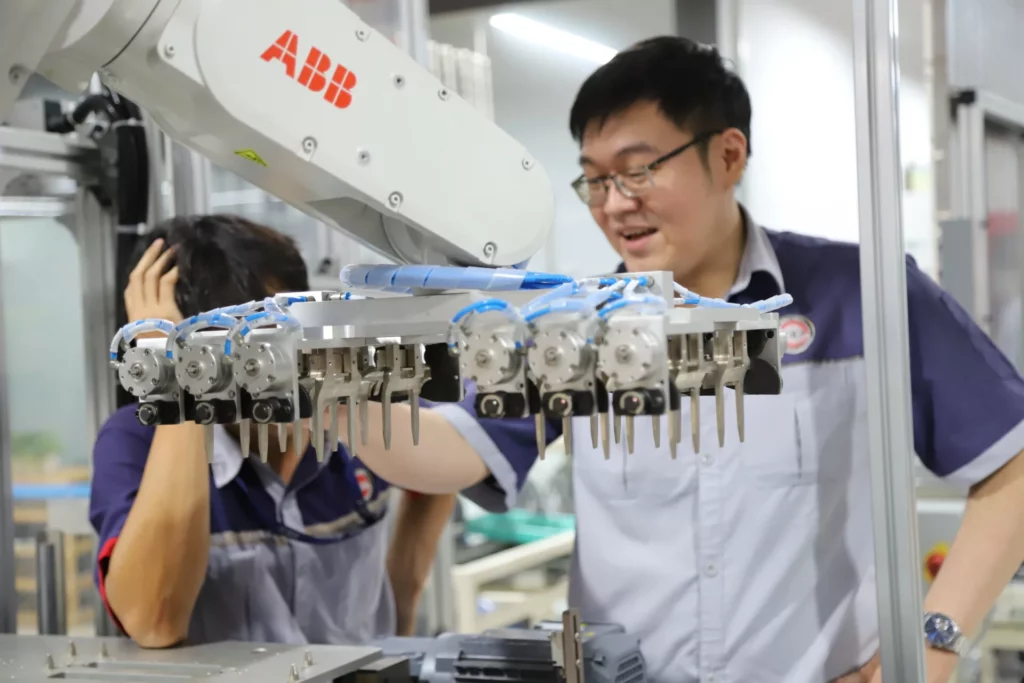
3. The 1990s–2000s: Technology boom and automation
Advances in microprocessors, sensors, and control software made industrial robots smarter, capable of performing complex tasks with high precision.
4. From 2010 to today: Smart robots and connectivity
Entering the 2010s, industrial robots are no longer merely mechanical devices but have become part of the smart manufacturing ecosystem. The fusion of AI (Artificial Intelligence), IoT (Internet of Things), and Big Data has given robots the ability to:
- Real-time production data analysis
- Self-learning from operating processes
- Optimize performance and reduce defects
Integration with production management systems
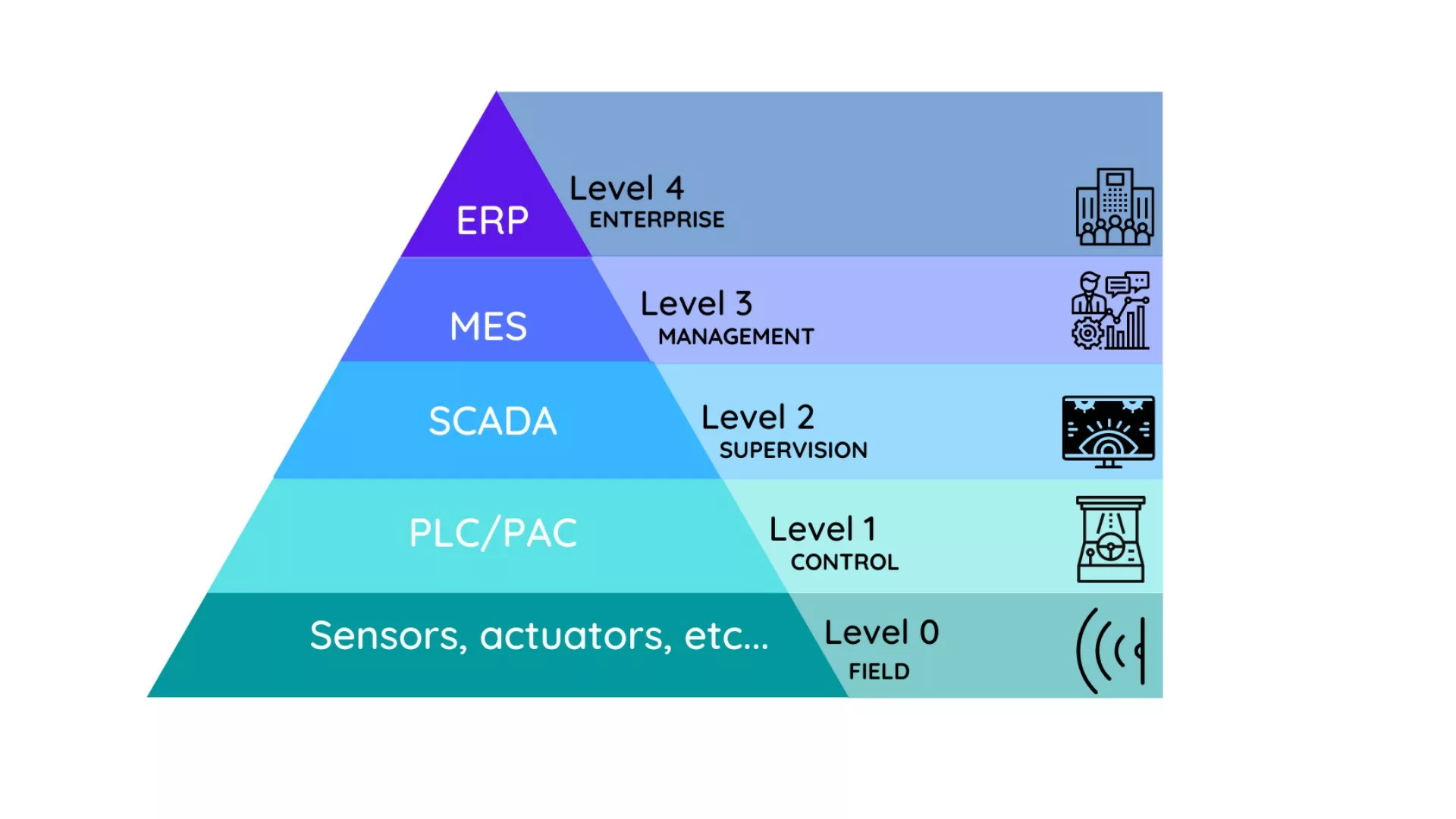
Modern robots are tightly integrated with operating and management systems such as:
- ERP (Enterprise Resource Planning): Synchronizes production data across departments such as accounting, warehousing, human resources, and order management.
- MES (Manufacturing Execution System): Enables direct monitoring of the production process, tracks machine performance, and analyzes product quality.
- SCADA (Supervisory Control and Data Acquisition): Remote monitoring and control system to manage the real-time status of robots and industrial equipment.
Vai trò trong nhà máy thông minh
In the Smart Factory model, robots not only perform tasks but also communicate with other systems, make data-driven decisions, and coordinate with humans through collaborative robots (Cobots). This helps businesses:
- Increase manufacturing flexibility
- Reduce product changeover time
- Improve responsiveness to market fluctuations
III. Key milestones in the development journey
Revolutionary inventions
- Unimate (1961): The first robot to be applied in manufacturing.
- SCARA Robot (1981): A robot specialized for electronic assembly.
- Cobots (2010s): Collaborative robots that can work safely alongside humans.
The birth of major industrial robot companies
- ABB Robotics – Switzerland
- Fanuc – Japan
- KUKA – Germany
- Yaskawa – Japan
Practical applications across industries
- Automotive: welding, painting, component assembly
- Electronics: pick-and-place components, quality inspection
- Food: packaging, product sorting
- Machinery manufacturing: CNC machining, material handling
IV. The future of industrial robot in automation
Cobots and new trends
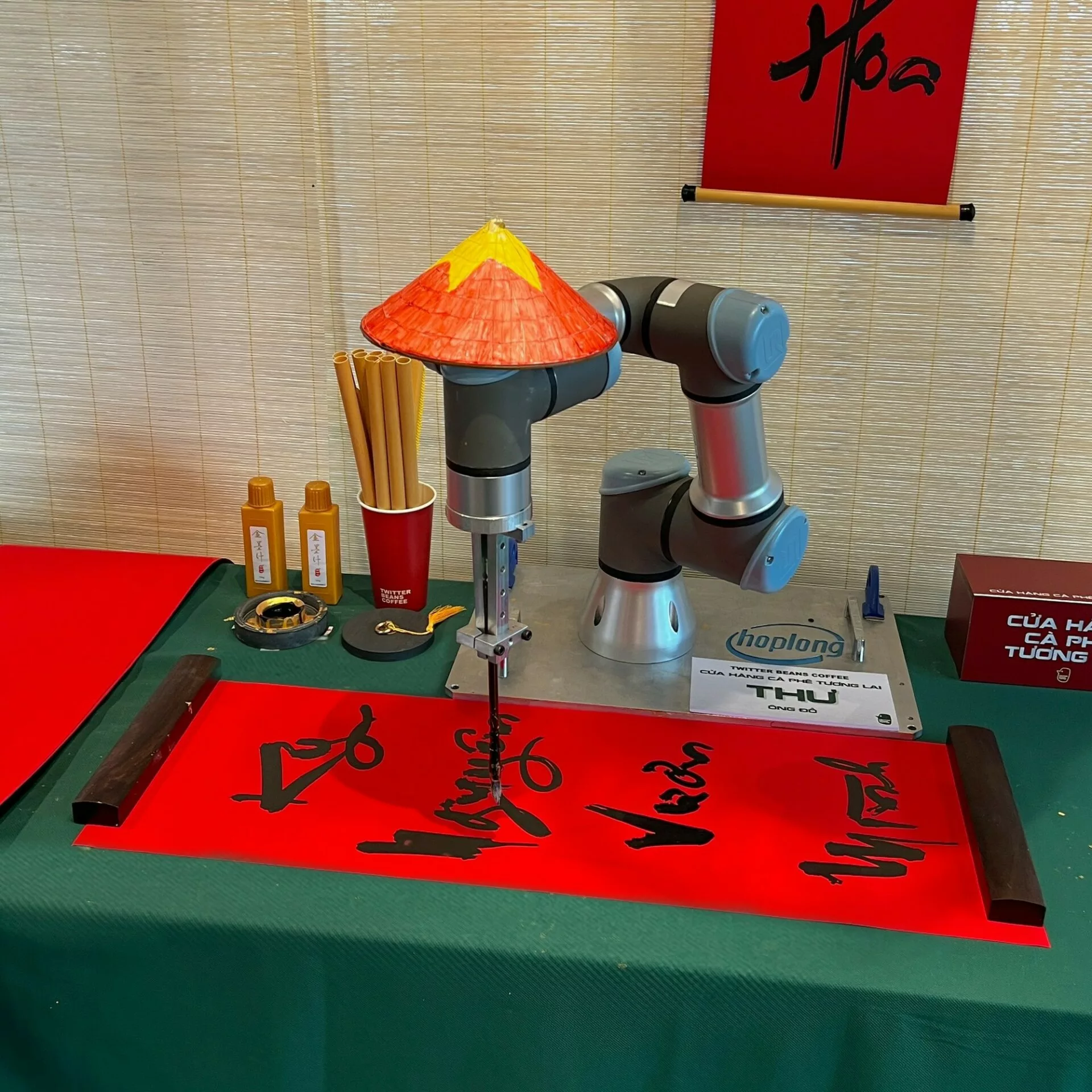
Cobots are emerging as a trend due to their ability to work flexibly, easy programming, and safe interaction with humans. Unlike traditional robots that require dedicated spaces, cobots can operate directly beside people, assisting repetitive tasks, boosting productivity, and reducing occupational risk. Modern robots are not only performing mechanical tasks but are also integrated with:
- AI: helps robots learn, analyze, and make intelligent decisions.
- IoT: connects robots to other devices in the plant.
- Big Data: processes large amounts of production data to optimize processes.
- ERP, MES, SCADA: production management and monitoring systems that help robots operate in sync with the entire line, from production planning to quality inspection.
Smart factories and the “lights-out” model
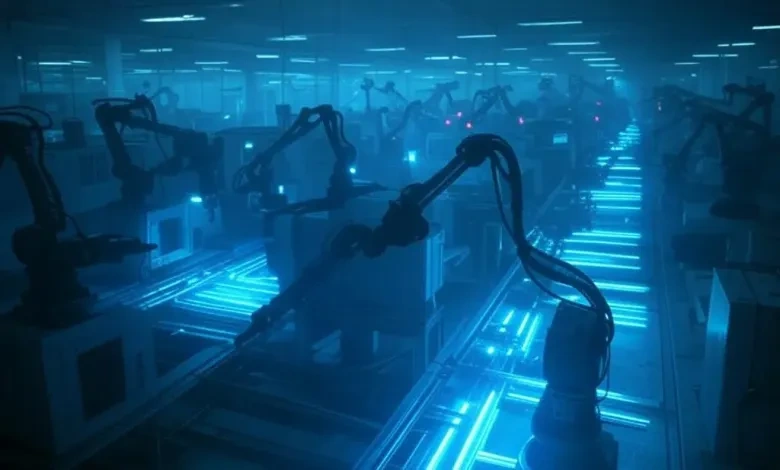
One of the hallmarks of the future of manufacturing is the “lights-out” factory — where the entire production process is operated entirely by robots and automated systems, with no lighting and no direct human operation. In this model:
- Robots handle every step from raw materials to finished products.
- SCADA monitors machine status in real time.
- MES coordinates production by order and machine capacity.
- ERP connects production data with departments such as warehousing, accounting, and logistics.
Superior benefits
- Operate continuously 24/7 with no breaks.
- Reduce operating costs and labor.
- Increase accuracy and product quality.
- Respond quickly to market fluctuations thanks to flexible manufacturing.
V. Conclusion – Industrial robot and the never-ending evolution
From a simple robotic arm to a smart automation system, industrial robots have traveled a long path full of creativity and innovation. In the future, industrial robots will not only be production tools but strategic partners in digital transformation and sustainable growth for businesses. IDEA Group stands ready to support your automation journey.